Digital Evidence Support Through Data Forensics DFW TX
When the facts of a matter are stored in devices, emails, systems, or cloud accounts in DFW TX, basic technical help is not enough. Your team needs guidance that fits litigation deadlines, evidence rules, and case strategy. Data Forensics DFW TX services supports modern cases where deleted communications, suspicious activity, or complex fraud issues must be preserved and explained.
Complete Legal helps legal teams manage complex digital evidence without losing focus on case strategy. Our data forensics services cover forensic preservation, detailed analysis, and expert witness testimony that can be reviewed, explained, and defended when challenged. From early data identification to final production, we handle Electronic Discovery Reference Model (EDRM) phases with careful attention to timing and accuracy.
Complete Legal supports Texas legal teams when deadlines are short and the evidence cannot wait. Our process brings together technical precision and clear updates, giving attorneys and support staff defensible digital evidence in formats ready for immediate use. From DFW and DFW to cases throughout Texas, we help keep discovery workflows structured, accessible, and timely.
Why Data Forensics DFW TX Matters in Legal Disputes
Data forensics focuses on preserving, collecting, reviewing, and presenting digital evidence found across computers, phones, servers, and cloud-based systems. This work uses scientific methods to recover and examine electronic information while protecting the chain of custody needed for admissibility in court.
Today, digital evidence is involved in many types of litigation. Employment disputes may require email review, access log analysis, or activity tracking. Fraud matters often involve financial records and patterns that suggest suspicious behavior. Intellectual property cases may call for deleted data recovery and data theft detection. Each investigation needs forensic methods and tools matched to the evidence involved.
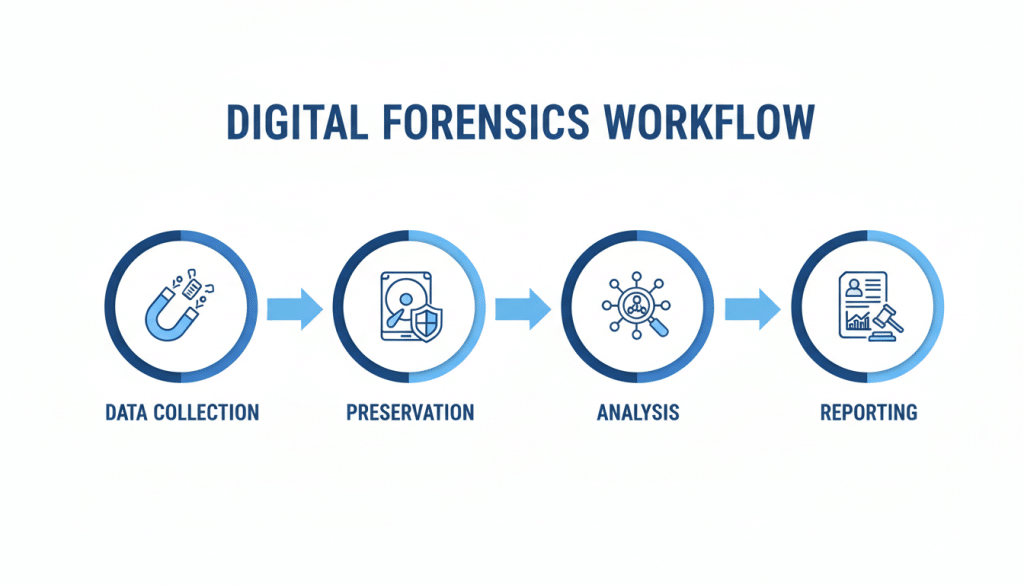
Computer forensics is one part of the larger data forensics field. It focuses on analyzing computer systems and storage devices. Data forensics includes those sources but also extends to mobile devices, network logs, cloud accounts, web applications, and other digital environments.
Data forensics also supports needs outside the courtroom. Security teams use forensic analysis to investigate cyber threats, unauthorized access, and data breaches. Compliance teams apply forensic methods to detect fraud and support regulatory requirements. Risk management professionals review digital patterns that may point to internal data loss or data theft.
Common Applications
Data forensics serves critical functions across different types of legal and organizational investigations.
- Workplace investigations focused on email communications and document access
- Financial data review to identify fraud indicators or suspicious patterns
- IP theft matters requiring recovery of deleted files and evidence of copying
- Cybersecurity incident response and threat investigation
- Regulatory investigations requiring verification of electronic information
Evidence Sources in Data Forensics
Forensic experts review different digital evidence sources based on the legal issues, available systems, and scope of the investigation.
- Internal and external storage devices used by computers and workstations
- Phones, tablets, smartwatches, and related portable devices
- Business email systems and online communication applications
- Network logs and internet browsing history
- Database systems and financial transaction records
Key Investigation Areas
Forensic analysis focuses on the digital areas most likely to contain relevant evidence for the investigation.
- Deleted files and data recovery from storage space
- Metadata examination showing file creation, access, and modification activity
- Activity records revealing how users accessed files, systems, or accounts
- Communications review involving emails, attachments, and message timing
- System artifacts indicating suspicious behavior or unauthorized access
Specialized Forensic Methods
Different forensic methods address specific investigation needs and evidence types encountered during analysis processes.
- Analysis of running systems to capture current threats and active processes
- Memory forensics used to preserve volatile data before a system is powered down
- Network activity review focused on communications, connections, and transfers
- Specialized extraction of mobile data from phones, tablets, and portable devices
- Cloud data collection and analysis for distributed systems and online services
Need Fast Help with Digital Evidence?
When a case involving Data Forensics DFW TX cannot wait, our experts help move the evidence process forward quickly and carefully. We manage preservation, forensic examination, and expert testimony so your legal team can stay focused on case strategy. Serving DFW and throughout Texas.
How the Data Forensics Investigation Process Works
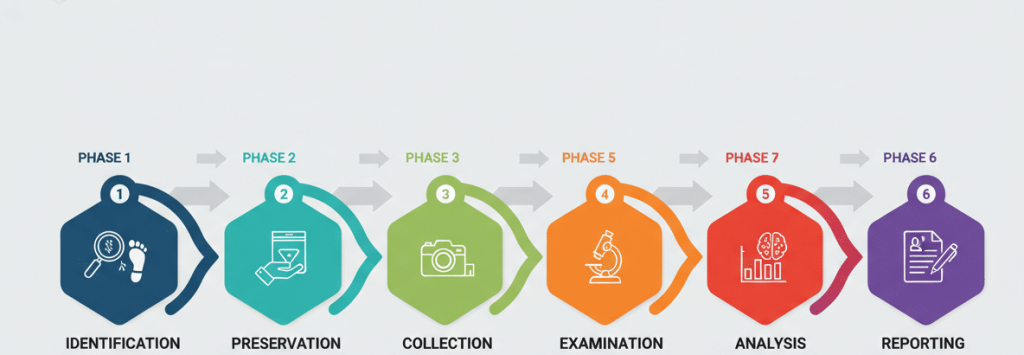
A strong forensic investigation depends on a clear process that protects evidence integrity and supports admissibility in court. Each stage connects to the next, creating a documented path from early identification to final presentation. For legal teams handling Data Forensics DFW TX matters, this structure helps set expectations, reduce confusion, and improve coordination with forensic experts.
Identifying Evidence Sources and Setting Scope
The investigation begins with identifying potential evidence sources and defining scope. Forensic experts work with legal teams to determine which systems, devices, and data types matter for the case. This phase establishes custodians, timeframes, and specific issues requiring examination. Proper scoping prevents wasted effort while ensuring no critical evidence gets overlooked.
Data identification involves mapping where relevant information resides across computer systems, mobile devices, cloud storage, and network infrastructure. Experts consider different types of storage media, backup systems, and archived data. They identify which forensic methods and tools will effectively capture needed evidence while maintaining integrity.
Protecting Evidence Before Analysis
The collection phase focuses on preserving digital evidence without changing it. Specialized imaging tools create complete copies of storage devices, including active files, deleted data, and hidden system information. By protecting the original source, forensic experts help maintain a defensible evidence record.
The right collection method depends on the source being preserved. Computer forensics often uses forensic images of hard drives or other storage media. Mobile devices may require logical extraction, physical extraction, or chip-level techniques. Cloud data may be collected through APIs, exports, or legal hold tools. Every method must be documented through strict chain of custody procedures.
Examining and Analyzing Collected Data
Examination involves processing collected data using forensic tools to make information accessible for analysis. This includes recovering deleted data, extracting metadata, parsing system artifacts, and indexing content. Forensic software processes various file formats, carves data from unallocated storage space, and reconstructs user activities from system logs.
Once the data is processed, experts examine it for evidence that supports the investigation’s objectives. This may include keyword searches, pattern review, fraud detection, timeline reconstruction, and user activity analysis. Computer forensics helps explain file access, system changes, and actions taken across devices or accounts.
Presenting Forensic Results
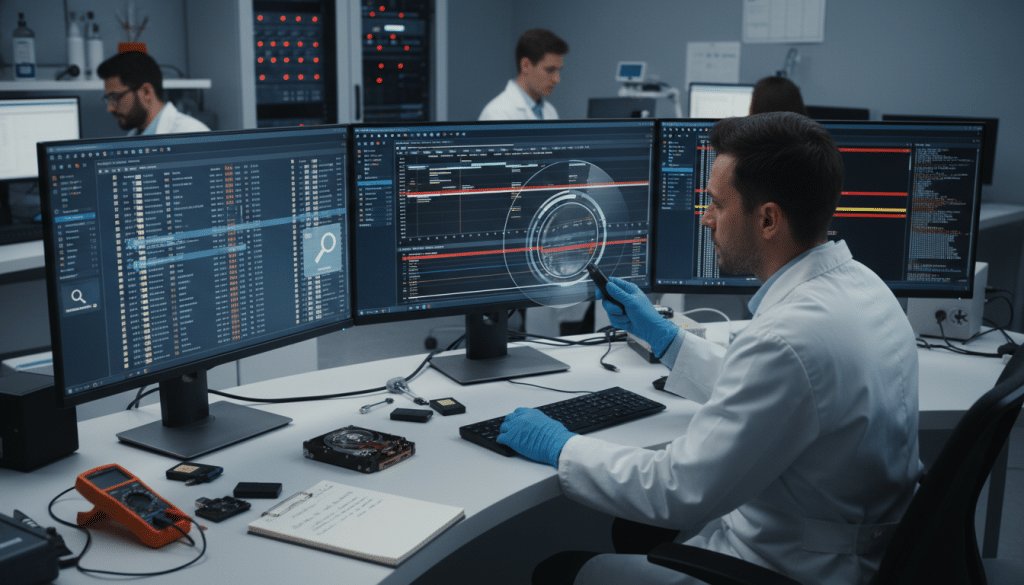
After analysis, experts document the findings in a report that can support legal review and testimony. The report describes the methods used, the evidence discovered, and the reasoning behind the conclusions. Proper documentation also allows another qualified expert to review and verify the work.
Expert witness testimony translates technical findings into understandable testimony for judges and juries. Experts explain forensic methods used, evidence discovered, and conclusions drawn. They defend their analysis under cross-examination, demonstrating how their investigation follows accepted standards and produces reliable results. Proper preparation ensures testimony withstands legal scrutiny.
Electronic Discovery Reference Model and Data Forensics DFW TX
Electronic Discovery Reference Model (EDRM) helps organize the electronic discovery process from the first review of possible data sources through final production. Data forensics fits into this structure by helping preserve, collect, process, analyze, and present digital evidence in a defensible way. For litigation teams, this framework makes complex discovery projects easier to manage.
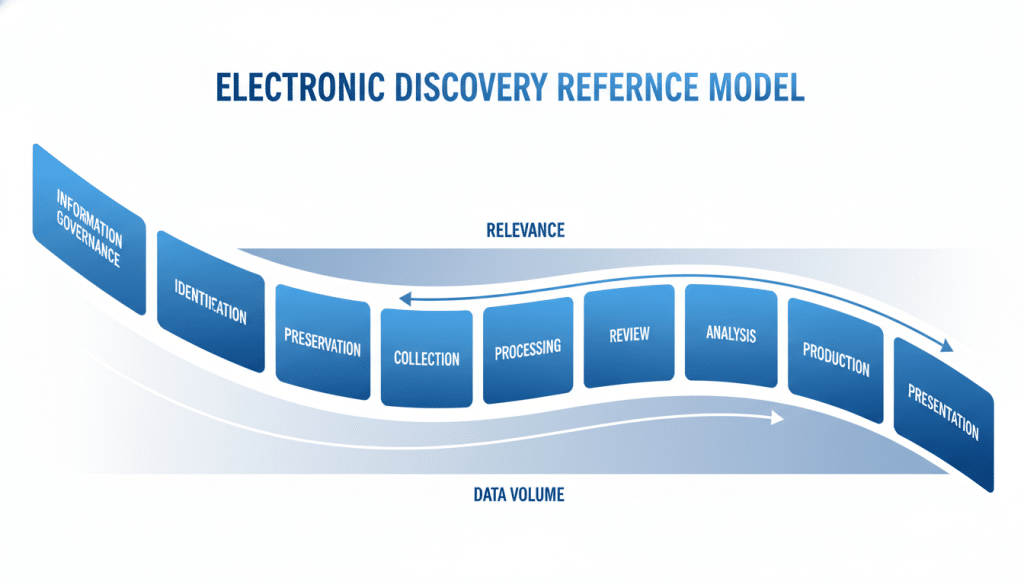
Identification establishes what data exists and where it resides. Preservation ensures relevant data remains available and unchanged. Collection gathers data from identified sources using forensically sound methods. Processing converts data into formats suitable for review. Review determines which data is responsive and privileged. Analysis examines data for patterns, issues, and case-building evidence. Production delivers relevant data in agreed formats.
Full-Spectrum EDRM Support
End-to-end support across EDRM phases gives legal teams a more organized way to handle digital evidence. Forensic experts begin by identifying key data sources, including devices, cloud platforms, servers, and network systems. They then choose collection methods that balance thorough preservation with practical efficiency. A single coordinated process helps avoid vendor gaps and repeated work.
During preservation and collection, every action matters. Specialized forensic tools create defensible copies, while chain of custody records track access and handling. Processing teams then organize large data sets so they can be searched, filtered, and reviewed efficiently. Complete Legal manages this technical workflow so attorneys and support teams can work with usable evidence.
Forensic analysis helps legal teams move beyond surface-level review. Experts can detect suspicious activity, reconstruct event sequences, recover deleted evidence, and identify metadata issues that may point to tampering or backdating. These methods often reveal evidence that would otherwise remain buried.
Production turns reviewed evidence into usable legal deliverables. Documents may need Bates labels, redactions, privilege logs, and formatting that meets court or party requirements. Secure hosting gives review teams access to the materials, while expert testimony can support authenticity and explain technical findings. This end-to-end support helps keep discovery controlled and consistent.
We Handle Every EDRM Phase—From Identification to Production
Complete Legal manages the full electronic discovery spectrum with forensic precision for Data Forensics DFW TX matters. Our Texas Best-recognized team delivers organized, court-ready digital evidence when your deadlines demand it. One partner, complete coverage.
Technology and Techniques Used in Forensic Analysis
Data forensics relies on specialized tools and methods designed for different investigation types and evidence sources. Professional-grade forensic software handles everything from disk imaging to mobile device extraction. Understanding which tools and approaches apply to specific situations ensures effective evidence recovery and analysis.

Imaging and Acquisition Tools
Forensic imaging creates exact copies of storage devices while maintaining evidence integrity. Write-blockers prevent any modification during acquisition, ensuring original evidence remains pristine. Industry-standard imaging formats like E01 and AFF include verification hashes proving copies match originals exactly. This process forms the foundation for defensible computer forensics investigations.
The best way to collect evidence depends on where that evidence lives. Offline systems may be imaged completely, active systems may need live acquisition, and remote systems may require network collection. Phones, tablets, and cloud applications involve their own tools, including mobile extraction hardware, software platforms, APIs, and legal hold mechanisms.
Software for Evidence Examination and Analysis
Collected images often contain large amounts of data that must be processed before meaningful review can begin. Forensic software indexes content, parses file formats, recovers deleted information, and extracts metadata. Experts can then use timeline analysis and registry review to understand user actions and system history.
Forensic experts often use focused tools alongside broader analysis platforms. Email tools process PST, OST, and MBOX data, internet history tools rebuild browser activity, file carving utilities recover deleted files, and hash analysis identifies known files. Together, these tools help narrow large data sets into evidence worth reviewing.
Detecting Fraud, Data Theft, and Suspicious Activity
Fraud, data theft, and suspicious behavior often appear through patterns rather than a single file. Advanced forensic methods can compare activity, flag anomalies, and search for terms or data formats tied to the investigation. This approach helps investigators focus on evidence that supports the case instead of reviewing everything manually.
When sensitive information disappears or moves outside approved systems, forensic review can help explain how it happened. USB device analysis may identify copied files, email forensics may show outgoing document transfers, cloud sync review may reveal shared folders, and network forensics may capture signs of data exfiltration. These methods support investigations into theft, misuse, or inadvertent disclosure.
| Forensic Method | Primary Application | Evidence Types | Key Benefits |
| Disk Imaging | Complete system preservation | Computer hard drives, storage devices | Exact bit-by-bit copy, preserves deleted data |
| Memory Analysis | Live system investigation | RAM contents, running processes | Captures volatile data, reveals active malware |
| Mobile Extraction | Smartphone and tablet investigation | Text messages, call logs, app data | Recovers deleted messages, extracts encrypted data |
| Network Forensics | Traffic analysis and threat detection | Packet captures, connection logs | Identifies data exfiltration, tracks communications |
| Email Forensics | Communication investigation | Email messages, attachments, metadata | Reconstructs conversations, proves transmission |
| Database Forensics | Financial and transaction analysis | Database records, transaction logs | Detects fraud patterns, tracks data changes |
Security and Compliance During Forensic Investigations
In Data Forensics DFW TX investigations, sensitive information must be protected from the moment evidence is identified through final reporting or production. That requires confidentiality controls, secure handling procedures, and attention to legal or regulatory obligations. A secure forensic process helps preserve evidence value while reducing risk to the client.

Chain of Custody and Evidence Integrity
A clear chain of custody helps prove that evidence stayed protected and unchanged throughout the investigation. Forensic teams document each transfer, access event, and action taken. Hash verification confirms the copy is identical to the source, and write protection keeps the original from being modified. Together, these controls help preserve the defensibility of digital evidence.
Evidence storage must prevent unauthorized access, alteration, or loss. Encrypted containers protect data while it is stored, and access controls restrict who can view or change forensic materials. Audit trails record activity involving the evidence. These safeguards help support authenticity and respond to claims of contamination or tampering.
Privacy and Confidentiality Protections
Forensic review may expose personal data, trade secrets, confidential business records, or attorney-client privileged communications. Privacy safeguards help limit unnecessary exposure of sensitive material. Privilege review identifies protected information before production, and redaction tools remove confidential content from deliverables. These steps help balance discovery duties with privacy protections.
Data handling protocols prevent unauthorized disclosure during forensic analysis. Secure workstations isolate forensic data from general networks. Encrypted transmission protects data moving between locations. Non-disclosure agreements bind forensic experts to confidentiality. Proper data disposal ensures evidence destruction follows security standards when investigations conclude.
Regulatory Compliance and Standards
Different industries face specific compliance requirements affecting forensic investigations. Healthcare organizations must comply with HIPAA when handling patient data. Financial institutions follow regulations governing customer information. Government contractors meet NIST standards for evidence handling. Professional forensic practices adapt processes to meet applicable regulatory requirements.
Recognized standards help forensic teams use consistent methods and quality controls. ISO standards can guide forensic processes, while NIST provides computer forensics guidance often used in federal contexts. Professional best practices also support reliable investigations. Following accepted standards can strengthen expert testimony and help defend admissibility.
Data forensics helps organizations investigate security incidents without ignoring compliance duties. Breach response work can show how a threat entered the system and what information may have been affected. Fraud analysis can identify financial misconduct or internal theft, while risk assessments can reveal vulnerabilities and suspicious behavior. The investigation must remain thorough while respecting privacy and regulatory limits.
Complete Legal’s Litigation-Focused Forensic Services
Complete Legal helps legal teams handle digital evidence through data forensics DFW TX services designed for litigation pressure. We combine technical skill with practical knowledge of Texas court requirements and discovery procedures. From preserving evidence to explaining findings through expert testimony, we manage the process with reliability and attention to detail.

Protecting Evidence Before It Disappears
Time can be critical when digital evidence is at risk of deletion, loss, or destruction. Complete Legal can move quickly to preserve computer systems, collect mobile devices, and secure cloud data before important information disappears. Our forensic imaging follows strict protocols for Texas litigation, and chain of custody documentation starts at collection so evidence handling is tracked from the beginning.
Digital evidence may be spread across computers, phones, servers, shared drives, and cloud platforms. Complete Legal uses source-specific preservation methods for each category, from full computer imaging to mobile extraction and cloud data export. Servers and network storage can be preserved in ways that reduce disruption while still protecting relevant information.
For urgent situations requiring immediate evidence preservation, call (214) 746-5400 or contact us to discuss rapid response options. Our Dallas-based team can mobilize across Texas to secure critical digital evidence before deadlines expire or data gets destroyed.
Reviewing Digital Evidence for Key Findings
Analysis involves more than basic keyword searches. Our forensic experts employ advanced methods to extract maximum value from digital evidence. Deleted data recovery uncovers files opponents thought were gone forever. Metadata analysis reveals document creation dates, modification history, and authorship details. Timeline reconstruction shows exactly who did what and when across computer systems.
Large data sets can hide important patterns until they are examined correctly. Complete Legal uses pattern detection to identify suspicious activity, fraud indicators, and unusual behavior. Email threading can rebuild conversations, access logs can show who viewed or copied files, and internet history may reveal research tied to key events. These findings can help support legal arguments with clearer evidence.
Complete Legal uses a case-focused approach to forensic analysis so legal teams are not paying for unnecessary work. Employment, fraud, and intellectual property matters all require different methods and evidence targets. By narrowing the review to the relevant issues, we help control costs while still pursuing important findings.
Forensic Expert Witness Support
Technical findings mean nothing if you cannot explain them clearly to judges and juries. Our forensic experts provide testimony translating complex computer forensics into understandable narratives. We explain collection methods, analysis processes, and investigation findings in plain language. Visual exhibits help communicate timeline reconstructions and technical concepts effectively.
Expert testimony withstands cross-examination because our methods follow recognized forensic standards. We document every step, allowing independent verification of findings. Our opinions rest on sound technical foundations and accepted industry practices. Experience testifying in Texas courts means we understand local procedures and expectations.
Deposition and trial preparation ensures testimony delivers maximum impact. We work with your legal team to understand case strategy and key points requiring emphasis. Mock cross-examination identifies potential challenges and strengthens responses. Clear, confident testimony helps judges and juries understand why digital evidence supports your position.

Managing the Full Electronic Discovery Process
Electronic discovery can become costly when each phase is handled by a different provider. Complete Legal offers complete EDRM implementation with one point of responsibility. From mapping data sources to preserving and collecting evidence, we help keep the process organized and defensible.
After collection, Complete Legal processes data into formats legal teams can review, using deduplication and filtering to reduce unnecessary volume. Secure hosting gives review teams online access from anywhere in Texas or beyond. Production then delivers responsive documents with Bates numbering, privilege logs, and required formatting. This unified approach helps reduce vendor coordination issues.
Our Dallas office at 1201 Elm Street, Suite 2560, Dallas, Texas 75270 gives Complete Legal a local hub for electronic discovery support across Texas. Secure facilities protect sensitive evidence, and advanced processing infrastructure helps manage large data volumes. This presence supports fast response in Dallas-Fort Worth and dependable service statewide.
Why Texas Legal Teams Choose Complete Legal
Litigation support is not just about having the right technical skills. Legal teams need a partner who understands deadlines, court expectations, discovery pressure, and the pace of active cases. Our approach brings together data forensic expertise and litigation-focused service delivery for Texas law firms and legal departments.
Deadline-Driven Focus
Court dates do not move because discovery ran late. We structure processes around your litigation timeline, delivering analyzed evidence when you need it. Rush services handle urgent preservation needs. Project management keeps complex matters on schedule. Reliable execution means no last-minute scrambling before critical deadlines.
Clear Communication
Technical jargon helps nobody. We explain forensic findings in plain language legal teams understand immediately. Regular status updates keep you informed without constant follow-up. Proactive communication alerts you to issues before they become problems. Accessibility means getting answers when questions arise, not days later.
Texas-Focused Service
Texas matters often come with local procedures, court expectations, and discovery requirements that outside vendors may not fully understand. Our Dallas-based team can respond across the state and provide support shaped by Texas litigation needs. Local expert witness experience helps align forensic work with regional expectations.

One Partner for Broader Litigation Support
A case may require more than forensic review, and managing several vendors can add unnecessary complexity. Our integrated services support deposition testimony, witness video, medical and business record retrieval, subpoenas, document review, production, and trial presentation materials. One coordinated service model helps simplify litigation workflows.
This comprehensive capability streamlines litigation workflows. One contact point coordinates all support services. Consistent quality standards apply across all deliverables. Integrated billing simplifies expense tracking and budgeting. Secure online access provides single-platform document and transcript retrieval. These efficiencies reduce administrative burden while improving service quality.
Recognition Backed by Reliable Work
Recognition is valuable only when it is matched by consistent service. Texas Best recognition reflects standards for quality, accuracy, responsiveness, and reliability across litigation support matters. We continue to focus on earning that trust through dependable execution on each case.
Trust is built through repeated performance, not single projects. Law firms return when support is reliable, communication is clear, and deliverables are easy to use. Our ongoing relationships with attorneys, paralegals, and litigation support teams reflect a service model built for real case demands.
Begin Your Data Forensics DFW TX Request
Complex digital evidence demands expert handling. Whether you need immediate preservation, detailed analysis, or expert witness testimony, we deliver forensic services tailored to your litigation needs. Our Dallas-Fort Worth team serves legal professionals throughout Texas with responsive, reliable support.
Dallas Office Location
Complete Legal
1201 Elm Street, Suite 2560
Dallas, Texas 75270
Contact Information:
Phone: (214) 746-5400
Email: info@completelegal.net
Serving DFW, DFW, and throughout Texas with comprehensive litigation support services including data forensics, e-discovery, court reporting, and more.
Let Complete Legal Support Your Digital Evidence Needs
Across many practice areas, digital evidence can become one of the most important parts of the case. Emails, files, records, devices, and system activity may help explain what happened and when. Professional data forensics services help preserve, analyze, and present that information with defensible evidence and expert testimony when the case requires it.

Complete Legal brings together the forensic process and the realities of active litigation. Our team understands that evidence must be preserved correctly, analyzed carefully, and explained clearly under pressure. From protecting integrity to identifying digital forensics evidence and preparing expert testimony, we support legal teams through each important step.
Electronic discovery can involve many moving parts, from finding data sources to producing documents and explaining forensic results. Complete Legal helps manage that process with support across preservation, analysis, production, and testimony. Our Dallas-Fort Worth presence and integrated litigation services help simplify coordination for legal teams across Texas.
If your case involves digital evidence that must be preserved, reviewed, or explained, Complete Legal is ready to support your litigation objectives. Speak with our team about data forensics DFW TX services for your matter by calling (214) 746-5400, emailing info@completelegal.net, or visiting our Dallas office at 1201 Elm Street, Suite 2560, Dallas, Texas 75270. We help legal teams stay organized and on schedule.


